
Why Understanding the Kitchen Remodel Process Matters
A kitchen remodel is one of the most exciting—and most disruptive—home improvement projects you can take on. For many homeowners in Doral, the idea of tearing apart the most-used room in the house can feel overwhelming. Questions like How long will this take?, Will I be able to cook at all?, and What happens first? are completely normal.
The good news is that when you understand the process from start to finish, the entire experience becomes far less stressful. At ProCraft General Contracting Doral, we believe that clear communication is just as important as quality craftsmanship. That's why we're breaking down every phase of a typical kitchen remodel so you know exactly what to expect before the first tile is removed.
Phase 1: Initial Consultation and Design Planning
Every successful kitchen remodel starts with a conversation. During the initial consultation, your contractor will visit your home to assess the current layout, discuss your goals, and talk about your budget. This is your chance to share inspiration photos, explain what frustrates you about your current kitchen, and ask questions.
After the consultation, the design phase begins. Depending on the scope of your project, this might involve:
- Selecting a new layout or confirming the existing one
- Choosing cabinet styles, countertop materials, and hardware
- Picking out flooring, backsplash tile, and paint colors
- Finalizing appliance selections and placement
This phase is where the vision comes together. Taking your time here prevents costly changes later. For homeowners in Doral and surrounding communities like Miami Lakes and Hialeah, we recommend visiting local showrooms to see materials in person before making final decisions.
Phase 2: Permits and Pre-Construction Preparation
Depending on the scope of your remodel, you may need permits from the City of Doral or Miami-Dade County. Structural changes, electrical work, and plumbing modifications almost always require permits. A reputable contractor will handle the permitting process for you and ensure everything is up to code.
Before demolition begins, your contractor should also:
- Provide a detailed project timeline and scope of work
- Order all materials so they're ready when needed
- Set up dust barriers and floor protection to minimize disruption to the rest of your home
This preparation phase might feel like nothing is happening, but it's one of the most critical steps. Rushing past it leads to delays, change orders, and frustration down the road.
Phase 3: Demolition
Now the real action starts. Demolition typically takes one to three days depending on the size of your kitchen. Old cabinets, countertops, flooring, backsplash, and sometimes walls are removed. If you're keeping any existing appliances or fixtures, your contractor will disconnect and safely store them.
A few tips to prepare for demolition day:
- Set up a temporary kitchen — A microwave, coffee maker, and mini-fridge in another room will be your best friends for the next several weeks.
- Protect your belongings — Even with dust barriers, fine particles travel. Cover furniture and electronics in adjacent rooms.
- Expect noise — Demolition is loud. If you work from home, plan accordingly or consider working from a coffee shop on demo days.
Phase 4: Rough-In Work (Plumbing, Electrical, and Framing)
Once the old kitchen is stripped down, the behind-the-scenes work begins. This phase involves updating or rerouting plumbing lines, installing new electrical circuits and outlets, and making any structural framing changes. If you're moving your sink, adding an island, or upgrading to a gas range, this is when those changes happen.
Rough-in work is also when inspectors may need to visit the site. Your contractor will schedule these inspections and make sure everything passes before moving to the next step. This phase typically takes three to five days but can vary based on the complexity of the changes.
Phase 5: Drywall, Painting, and Flooring
With the rough-in work approved, the walls are patched or replaced with new drywall, then primed and painted. This is also when new flooring is installed. Whether you've chosen porcelain tile, luxury vinyl plank, or hardwood, getting the flooring in before the cabinets ensures a clean, professional finish.
Interior painting and flooring installation may seem like small steps compared to the structural work, but they set the visual foundation for your entire kitchen. Choosing the right colors and materials here makes a dramatic difference in the final result.
Phase 6: Cabinet and Countertop Installation
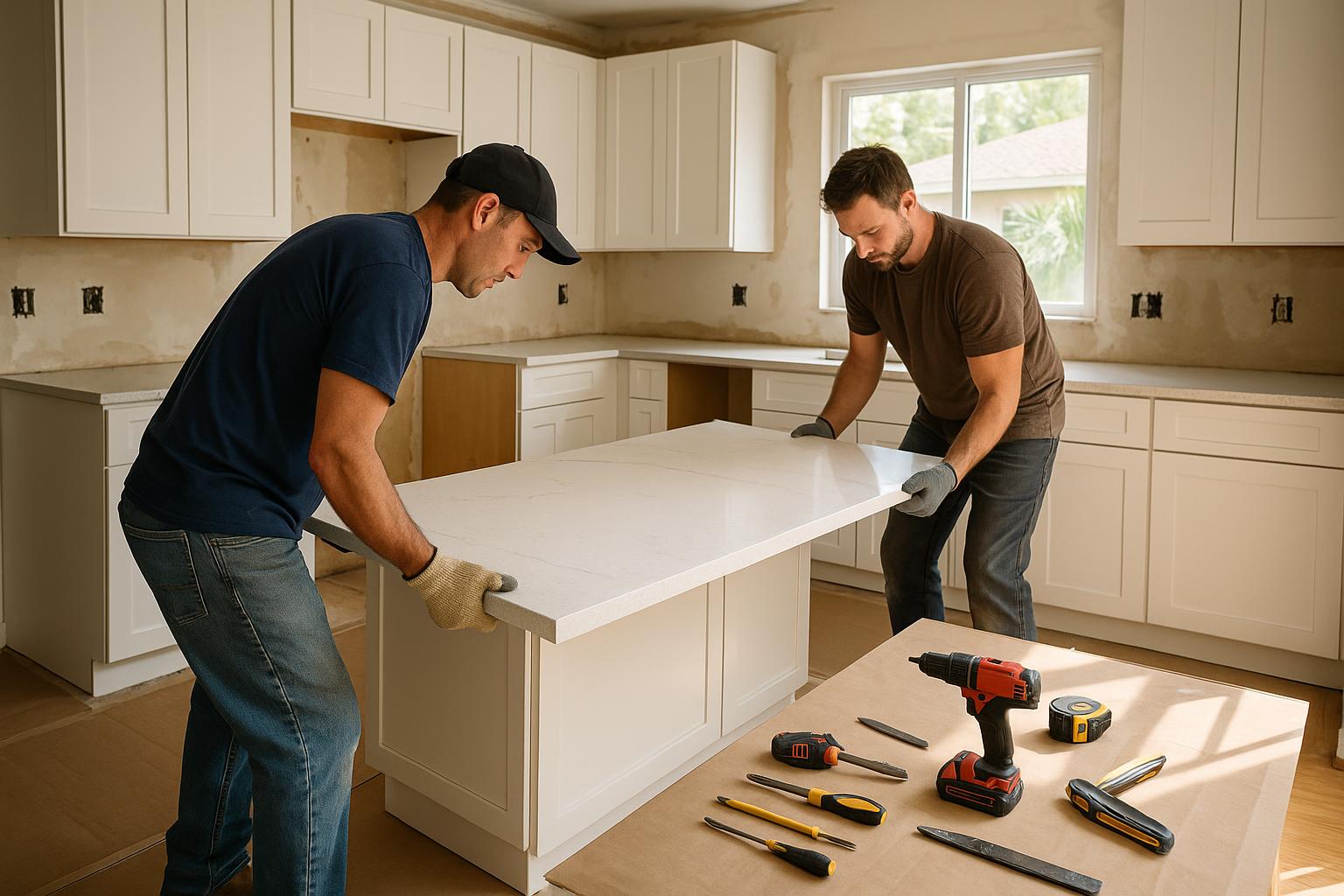
This is the phase where your new kitchen really starts to take shape. Cabinets are installed first, carefully leveled and secured to the walls. Once the cabinets are in place, countertop fabricators will do a final measurement—called a template—and then return a week or two later to install the finished countertops.
The gap between templating and countertop installation is one of the most common sources of impatience for homeowners. It's worth the wait. Custom-fabricated countertops fit perfectly and look far superior to anything cut from a generic template.
Phase 7: Backsplash, Fixtures, and Finishing Touches
With the countertops in, the backsplash tile is installed. Custom tile work is one of the details that can truly elevate a kitchen from ordinary to extraordinary. Subway tile, mosaic patterns, and large-format porcelain are all popular choices among South Florida homeowners.
After the backsplash, the finishing touches come together quickly:
- Sink and faucet installation
- Appliance hookup and placement
- Cabinet hardware installation
- Light fixtures and under-cabinet lighting
- Final trim and caulking
Phase 8: Final Walkthrough and Punch List
Before your contractor calls the project complete, you'll do a final walkthrough together. This is your opportunity to inspect every detail—cabinet doors, grout lines, paint edges, hardware alignment—and note anything that needs adjustment. These items go on a punch list, and your contractor should address every one of them promptly.
A quality contractor welcomes this step. At ProCraft General Contracting Doral, we don't consider a project finished until you're completely satisfied with the result.
How Long Does a Kitchen Remodel Take?
Most full kitchen remodels in Doral take between six and ten weeks from demolition to completion. Smaller projects like a cabinet refresh with new countertops might take three to four weeks. Factors that affect the timeline include:
- Material lead times (especially for custom cabinetry and natural stone countertops)
- Permit and inspection schedules
- The extent of plumbing and electrical changes
- Weather delays for any exterior-related work
The best way to keep your project on schedule is to make all design decisions before construction begins and to work with a contractor who communicates proactively about timelines.
Ready to Start Planning Your Kitchen Remodel?
If you're a homeowner in Doral, Sweetwater, Miami Springs, or the surrounding area and you've been dreaming about a new kitchen, understanding the process is the first step toward making it happen. A well-planned kitchen remodel adds value to your home, improves your daily life, and gives you a space you're proud to share with family and friends.
ProCraft General Contracting Doral is here to guide you through every phase—from the first consultation to the final walkthrough. Reach out to us today to start the conversation about your kitchen renovation.